Potatoes

Admin note: so technical issues weren’t quite as resolved as Megan had hoped. Megan thinks it’s now resolved. With luck we’re all back up and running.


It has been so long since we have written, it’s hard to know where to pick back up.  Farming is so very much dependent on the weather and the seasons – fighting either is a fool’s game. But seasonal means cyclical and we have been writing notes about our adventure for nearly four years and so many things seem redundant to share. How many times can we write about planting tomatoes and still make it interesting? It’s always a bit of a struggle to figure out if the mundane is of interest or if we should just highlight the big changes. So thank you for being interested in our lives.

It’s summer right now – hot, humid, and very, very sunny.  The weather gods have been kind to us this year.  It has been hot and humid as usual, but this year we are getting the much needed rain.  Just about the time we worry about having to water the trees, we get a really nice rainfall, and at night!  We received 33 mm at the end of last week, and three weeks ago we had 26 mm.  So at least this year our pasture is growing, the trees and vegetable garden are getting watered and we have yet to have to buy supplemental feed for the cows and sheep.

IMG_7409

The good summer weather, no matter how hot, is a nice change from the spring. Spring arrived with lots of heavy rain and cold winds.  We lost a lot of flowers and leaves off the olive trees and our fruit trees.  Some of the vegetables Megan had already put in the ground, other seedlings were hardening off – a large percentage of both died from the frigid winds.  It set back everyone in the region with regards to getting the spring planting done – from backyard gardens to large plantation crops. Our garden was already been behind in getting planted because our garden beds did not get properly winterized and we needed to amend some of the beds, so it was first “fix” the bed then plant it. But hard to fix a bed when it’s mud and weeds long into spring.

So in stead of fixing the beds first, one of the first things we felt obligated to plant was potatoes.  Due to the overall poor weather for the last two years, the potatoes available to purchase have been of marginal quality. Megan found, bought, and we then planted about 500 seed potatoes.

potatoes

So while I had a hard time understanding why we created yet another garden plot in which to plant potatoes, we did.  (Megan gave lots of explanation. Jon concurred. Ruben agreed. It’s still a whole extra garden bed.) We worked hard and fast to get the seed potatoes into the ground during their planting window. Despite agreeing on the merits of a potato bed, Ruben did not agree with Megan on how to plant the potatoes.  So, we did it his way.

potatoes-1

Due to a combination of weather, our soil, and the manner in which the potatoes were planted, we had a failed crop. Next year, we will try again. This time planting them Megan’s way.

Sleeping Garden

The garden was in full swing this summer and we fought hard to keep things flourishing. But it was once again lost a lost cause with no rain and lots of heat. So we began to close things down and started thinking about fall plantings.  Even before we could get the beds cleared and seeds sprouted in the green house the rains and cold weather hit. So we have been working on winterizing the garden, pulling out old crops, hauling them to the chickens and pigs and mulching the beds.

IMG_7364

This garden bed is not really Sleeping but is planted in GARLIC!  Garlic is a plant in fall harvest 9 mo. later kind of food. And it gets planted in fall. If it doesn’t overwinter the heads are tiny with no real cloves. It’s the perfect thing to plant for replenishing a bed – it’s a cheater’s kind of fallow. The garlic cloves get HEAVILY mulched – about two inches of mulch on top of the planted cloves. After harvesting the hoped for garlic bulbs, the decomposing compost / mulch gets turned under in spring. The gardner gets a crop while revitalizing the soil at the same time. That is if the cloves don’t drown from the rain or get topped by the birds. But that’s the trials of gardening.

IMG_7361

The tomato beds has been mulched – if the weather breaks and warms up a wee bit in July Megan will plant the rows in fave beans – adding nitrogen for the spring planting and a bean harvest to boot. All weather dependent of course.

IMG_7355

Some beds actually got seeded before the cold rains hit. The winter mustard, radishes, and a few struggling beets are in bed 9. Those beds which had rows prepared prior to the rain were planted in oats. The oats act as a fallow rotation and let us easily cut greens for the rabbits. We didn’t get all the oats in before the rain and nothing grows in the mud right now.

IMG_7409

After a few months of impatience we managed to fertilize and seed parts of the pasture.

IMG_7353

The rabbit forage bed also got seeded in winter wheat. It’s slow due to the early cold but with a bit of patience we should have some more winter rabbit forage.

As with any garden, Winter is planning time! Onions, leeks, and celery are getting started now for spring planting – Tomatoes, peppers, and eggplants get started mid July, and from there is off and running. So right now the kitchen table is doing double duty as garden planning central. Megan (and I) can’t wait for the office to be finished so all the seeds and charts and notebooks and stuff moves off the kitchen table. Likely by then we’ll be trading seed packets for heads of early lettuce.

IMG_7421

As always, every year we learn a little bit more about the local climate and how to best handle the  unexpected wind, rain, and droughts.  Things will be done differently next year and it is all in the planning.


spaghetti squash

According to my mother, this year we planted a reasonable amount of spaghetti squash. I.e. less than last year.  They survived the drought and the heat just fine.  Spaghetti squash is a vegetable that we have yet to find in the vegetable section of any market.  It’s a very versatile squash and we use it as the base for many meals in place of potatoes or rice.

spag squash

We might not have enough to last until next season, but enough to add variety to our meals.

Pumpkins

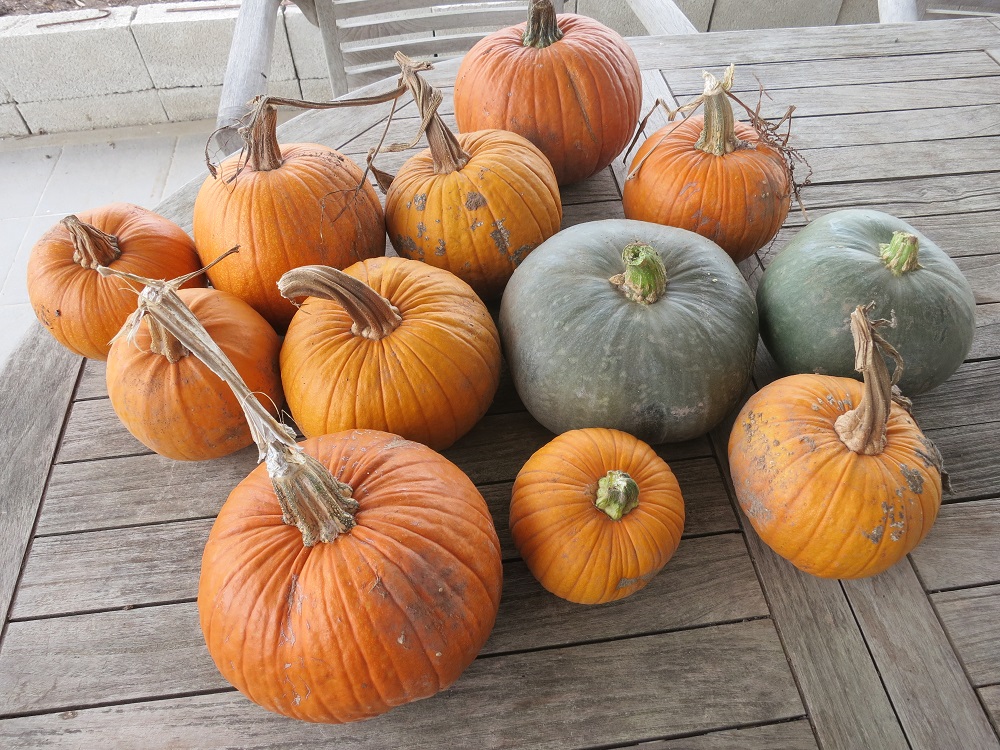
The squash likes the hot dry weather.  The pumpkins are New England Pie and have been the first to ripen.

pumpkins

Not only have the pigs enjoyed the pumpkins, but the dogs get a serving of pumpkin puree in their dinner, and of course, we had to have pie!

pumpkin pie

YUM!

Carrots

The drought has made gardening a little difficult.  The carrots were so hard to get out of the ground, you had to chisel them.  Then, they were not happy with the low volume of water and began to show the stress.  So we had our guys help us to pull them all up, at once.

carrots 1

carrots 2

And off to the pigs it all went.

Tomatoes

The tomato plants are coming into full harvest.  I say coming into because we planted tomatoes in two waves – wave 2 hasn’t ripened yet. Even so, we have been feeding them to the chickens, the pigs, our neighbours, selling some, and we are eating lots too.  I have taken to cooking and freezing them.  It actually works out well because while I can buy tomato sauce in the market, one cannot purchase stewed tomatoes.  So I am freezing what I can.  I am also freezing whole the little yellow cherry tomatoes that Jon likes to eat like grapes and come winter weather, roast them for part of a meal.  Next year we might invest in a dehydrator, and preserve even more.

tomatoes 1

tomatoes 2

tomatoes 3


Garden photo update

We posted photos of these plots newly planted so I thought maybe you all might like to see them growing and producing.

Here is our tomato plot.  We are getting a few delicious tomatoes as they come ripe.  Jon is our tomato lover and is discovering which varieties he likes the best.  I am busy making stewed tomatoes and freezing some for winter. We also have been sharing tomatoes with friends.

tomato field 1

tomato field 2

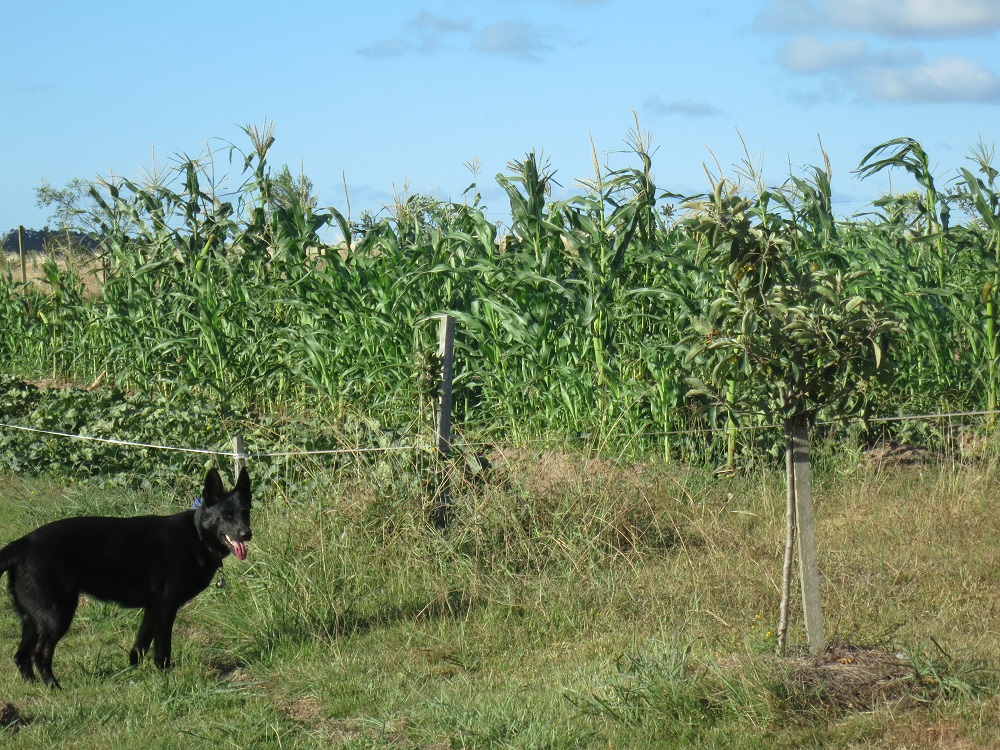
And here is the corn and melon and pumpkin bed.

corn and pumpkin plot

In trying to work with the weather, our second dry hot summer with little or no rain, the crops we planted that like the heat are doing well.  The ones that need shade or cooler temperatures, are not doing so well.  Each year we learn a little more about our soil and climate and the needs of our plants.

Small harvest of small apples

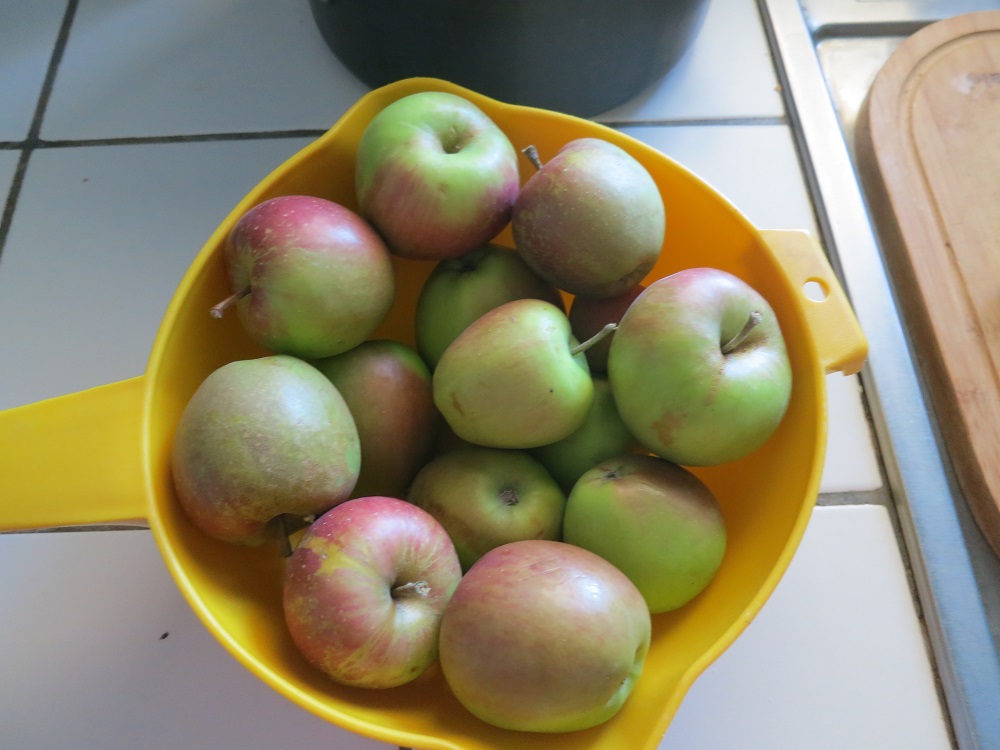
A few apple trees gave us delicious little apples this year.  The trees are only a few years old – and those years have been bad water years. So any apples are a stroke of luck right now. Someday we hope to have enough to try making home made cider.

apple tree

apples

apples

We have nine different varieties of apples planted.  We had two colanders of a combo of Fuji and Granny Smith.  They were delicious to just pick and eat. In theory we should have a lengthy harvest period due to the varieties having different ripening times. Not this year. Maybe next year.


How our garden grows in pictures

Do you know your vegetables? Can you figure out what all we have growing, blooming, and seeding? Here is what we have in our outside garden plots:

garden 1

garden 2

garden 3

garden 4

garden 5

garden 6

garden 6a

garden 7

garden 8

We have eight outside garden plots.  One has been seeded for animal feed/grass.  The rest are vegetables (except for the strawberries).  Megan starts the veggies as seeds from two to four week intervals, so we will have rotating seasonal crops and not just a one time harvest.  She also keeps track of companion plantings and which plants follow another for soil nutrient replenishment.  Yes, this is a lot of hours in the planning and doing.  She has only one helper, Ruben.  He comes from a family of vegetable gardeners and comes to work with a smile, ready and willing to do what ever is asked.

Inching into a CSA

So summer has arrived full force here on the farm. It’s well over 90 F today, scorchingly bright sunshine, high humidity, and little to no breeze. So it gives me moment to catch my breath while sitting under a fan.

Last week I delivered the first four boxes in La Piccolina’s CSA. Last year I tried to get one up and going – and I failed to be able to produce enough produce. The drought, lack of irrigation, and not being quite prepared enough just didn’t quite let me get there. Customers in nearby Garzon were wonderful last year. And excited to try the adventure with me again this year! I have wonderful, enthusiastic customers. Heidi, who very graciously agreed to be the central drop-off location, also happens to be a fabulous photographer (you can find her at: .heidilender.com,  heidilender.tumblr.com, and instagram.com/heidilender). When I dropped the boxes by she promptly set up an impromptu still life. Her resulting photograph is so gorgeous I asked to be able to share:

Copyright Heidi Lender 2015

Copyright Heidi Lender 2015

I’m going to get a print to put up on the farm office walls. No, I haven’t actually painted those wall yet and no, there is no floor. But that’s not the point. Look at the gorgeous photograph of La Piccolina’s CSA vegetables!