New Chicks!

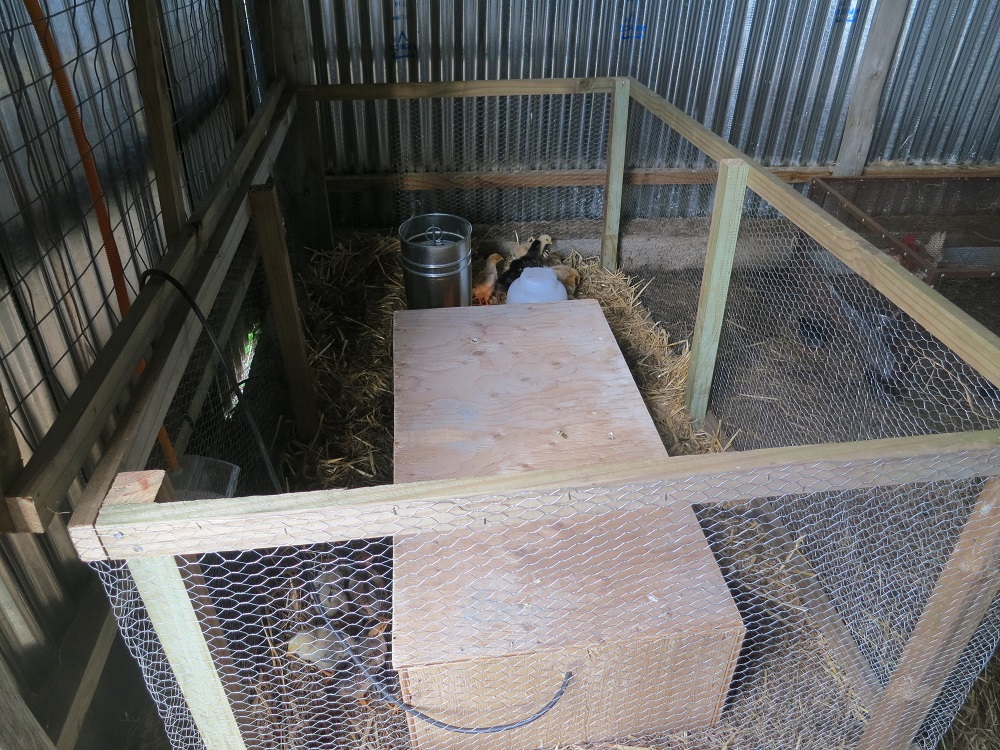
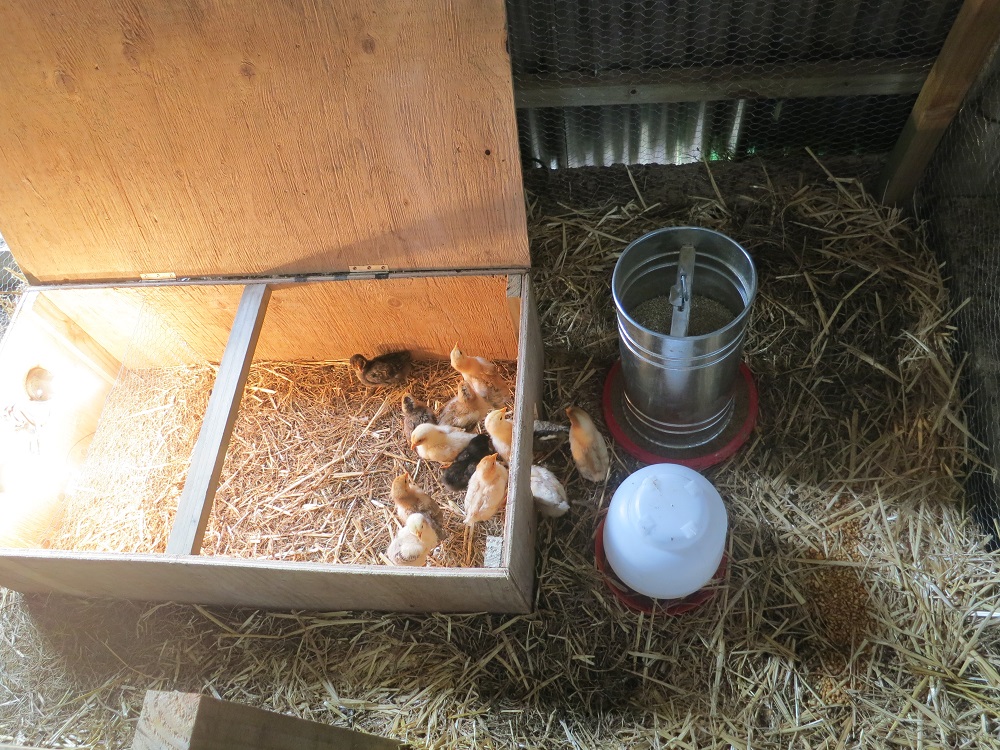
The chicks arrived safely and, more importantly, survived their first very cold nights. The yellow chicks above are the Cornish cross meat chicks. The black ones below are the commercial layer chicks.

They don’t share space so you can’t tell, but the meat chicks are twice the size of the layer chicks. Same age, but so, so much larger. We are starting with 45 meat chicks and 85 layer chicks. In our past experience, we tend to lose 10% of the chicks between arrival and adulthood or freezer camp, so we buy accordingly. We feed a mixture of commercial chick rations and crumbled hard boiled eggs. We only add the hard boiled eggs if we have extra but have found the additional protein and nutrients to really made a difference with the chicks.

Our new brooder box setup:

The wood frame is one meter square with an open top and open sides. The blue fabric is old shade cloth doubled over and draped on top and down the sides at two different heights to cover all the sides. The shade cloth helps hold the heat in but is adjustable if the weather warms up. There are side slats at three different heights which will let us move the lights up as the chicks no longer need so much heat. The floor of the brooder is an electric blanket.

Inside the brooders:

The electric blankets are covered in a washable cover that I made to measure and the blanket itself is washable. There are four incandescent light bulbs to provide heat and light. The chicks have heat from above and below and have been very happy even though we’ve gotten down to freezing at night. During the day they warm up in the brooder box then run around their enclosure then go back and get warm. So far our changes have been very successful!

The other big change we made was to add a water faucet inside each brooder space. Before we had to walk through all the doors to the one faucet in the entire brood house, carrying the waterers carefully. Now we can easily refill waterers. So much easier.

The meat chicks grow out from anywhere between 8 to 12 weeks depending on how fast they grow, then will be off to the freezer. The layer chicks stay in the brooder house until they have all their feathers – including head feathers. When they are fully feathered at around 12 weeks, even though still quite tiny, will move over to our grow-out space. Which is really just a smaller chicken coop with the roosts, outdoor yard, and nesting boxes. They’ll stay there until they start to lay eggs at about six months which is when we’ll add them to the main flock.

I’ll share pictures as they grow but they really are the cutest at this age.


¡Pollitos nuevos!

¡Los pollitos llegaron! Y, más importante, sobrevivieron las primeras noches frías. Los pollitos amarillos son las dobles pechuga. Los negros abajo son las ponedoras.

Como no están en el espacio mismo, no puede ver que los amarillos son doble el tamaño de las negras. La edad misma, pero mucho más grande. Empezamos con 45 dobles pechuga y 85 ponedoras negras. En nuestra experiencia vamos a perder 10% de los pollitos entre la entrega y cuando son adultos (o la faena), y compramos más para tener suficiente. Damos una mezcla de ración comercial y huevos cocidos. Agregamos los huevos cocidos, solamente se sobra huevos en casa, pero aprendemos que la proteína adicional es muy importante con los pollitos.

Nuestra caja de criadora nueva:

La estructura es un metro cuadrado sin techo y abierto a los dos lados. La tela azul es malla de sobra vieja doble y puesto sobre y entre las paredes para cubrir todos lados. La malla de sobra ayuda a mantener el calor adentro, pero podemos ajustarlo si el tiempo cambio. Hay barras atadas a tres alturas que nos permite a ajustar las lámparas por cuando los pollitos no precisan tanto calor. El piso de la caja es una cama caliente.

Adentro de las cajas de criadora:

Las camas calientes están cubiertas en una sobre lavable de algodón que hice a medida y la cama caliente es lavable también. Están cuatro lámparas de filamento para luz y calor. Los pollitos tienen calor de abajo y de arriba y están muy feliz, no importa que anoche fue cero grados. Durante el día están en la caja para calentarse y después salen y juegan en el espacio más grande y más tarde vuelvan a la caja de nueva. Todavía los cambios son muy exitosos.

El otro cambio grande que hicimos fue a poner una canilla en cada espacio. Antes tuvimos cruzar todos los espacios a una canilla sola, con los bebederos en mano, manejando las puertas, los pollitos y los bebederos todo juntos. Ahora podemos rellenar los bebederos sin salir el espacio. ¡Mucho más fácil!

Las dobles pechuga viven entre ocho a doce semanas, depende como crece, y después van al freezer. Las ponedoras quedan en el pollero hasta tienen todas las plumas – incluyendo las plumas de la cabeza. Cuando están plumados, más o menos a 12 semanas, van a un otro espacio más, como un gallinero con dormideros, nidos, y un espacio abierto al exterior. Van a quedar allí hasta empiezan a poner alrededor de seis meses cuando agregamos al gallinero principal.

Sobre las semanas que viene voy a compartir fotos, pero realmente, son lo más cariñoso ahora.

Preparing for spring chicks

It’s time for raising chicks again! We’ve made more than a few changes with the chickens over the last six years. One of the biggest changes we made last year: we converted one of our underused greenhouses into a chick raising space.

It was our easternmost greenhouse and was always the hottest. Which made it nearly unusable for vegetables from December to March. But chicks *love* the heat. In fact, they need to have about 90 degrees F for the first week. So we changed it over last year. We let the space rest starting May of last year so we have a bit of upkeep to do before the chicks arrive.

A couple of the fiberglass roof panels have developed holes over the winter and we have decided to upgrade the chick warming boxes. We have been raising chicks, either from our incubator or purchased in, for about 10 years now and we’ve learned a few things and thought now was a great time to tweak our process. So my father collected some of the scrap wood we have and has spent today and yesterday making new boxes. Then on to roof repair. And then we’ll have new chicks!

We have on order both Cornish cross and commercial layer chicks. The Cornish cross can’t be beat for feed to meat ratio and the commercial layer chicks have the advantage of being sexed – which means we get all females. This will be the first year we don’t incubate eggs from our own flock. It’s one of the steps we are taking this year to simplify some of our farm activities. It feels weird not to be cleaning and setting up the incubators. But I am looking forward to not worrying about power outages during spring storms and if the eggs will stay warm enough!


¡Preparaciones por los pollitos!

¡Es tiempo por los pollitos! En los últimos seis años hicimos muchos cambios con la cuida de gallinos. Uno de los más grandes hicimos el año pasado: convertimos unos de nuestros invernáculos a un espacio para criar pollitos.

Esto es nuestro invernáculo más al este y siempre fue el más caloroso. El calor desde diciembre hasta marzo fue tan alta que no pudimos plantar verduras adentro. Pero los pollitos encantan el calor cuando están muy joven. ¡Cambiamos el espacio el año pasado y funciono muy bien! Dejamos vacío desde mayo del año pasado y tenemos un poco de reparaciones para hacer antes que llegan los pollitos.

Algunos de los paneles de fibra de vidrio que usamos por el techo tienen agujeros y también decidimos de mejorar las cajas donde viven los pollitos. En los 10 años (más o menos) que criamos pollitos aprendemos algunas cosas y pensamos que ahora sería un tiempo lindo a cambiar un poco el proceso. Entonces, mi padre reunido madera tirada en varios lugares y pasamos los últimos días construyendo cajas nuevas. Después reparamos el techo. ¡Y después, llegan los pollitos!

Pedimos doble pechuga y ponedoras negras. Las dobles pechuga son lo mejor para tener pollo al horno y crecen lo mejor por el precio de ración. Las ponedoras negras son una cruz comercial llegan sexado – que significa que recibimos solamente hembras. Este año sería el primero que no usamos las incubadoras para criar pollitos de nuestras gallinas. Es unas de las decisiones que hicimos este año para simplificar algunas partes del campo. Se siento raro no preparar las incubadoras. Pero estoy muy feliz a no preocuparme sobre cortes de luz durante las tormentas de la primavera.

Chicken Yard

In between rain squalls we have managed to finish the bulk of the chicken yard remodel. Remodel you say? What remodel?

If you remember way back when Jason helped build (or built, depending on who you ask) the bulk of our chicken coop. Which we LOVE. But, as noted then, it wasn’t quite finished. Over time the feature list changed a bit and so while getting the last few things worked on we remodeled it a bit. After all, two years’ experience with the chicken yard has taught us a lot.

So, what did we do? We built another building to the South of the main coop and shrunk the size of the main chicken yard a bit by putting up an interior fence to create both a second, small chicken yard attached to the new building and an entryway. .

chicken yard 1

The second small building will be our incubator / brood house. We knew we needed to change the location of where to grow out our incubator chicks.  The incubators had been on card tables in the small, not quite finished (see the trend here? ) guest house. But they couldn’t stay there long-term (some day we’d like a finished guest house). So, we needed a place for the incubators to be that was connected to electricity, free of drafts, able to be kept warm, easily visible, and accessible.  After hatching, the baby chicks need to have a warm space they can move about in and have access to food and water. This part we did have – and it worked well – but it took up valuable roost space in the main chicken house.  What we were missing after the chicks fledged from this smaller, contained and warmed pen was a place for them to roam as they grow out a bit more. We had been just turning them loose into the general population but that wasn’t quite ideal. Yet they need to be able to go outside, but not compete with the larger chickens, while still be near enough to be seen and heard by the older chickens, which helps the chicks integrate into the larger, cohesive flock and not be so competitive as adults. So enter the brood house.

chicken house 2

It is almost ready to go.  Still no electricity. Which really means it’s unusable. But for right now since we are in winter and it’s too cold to hatch chicks it’s not quite such a big deal. Give it a month and we’ll be scrambling for that electrical hook-up.

The space between the two buildings is our new entry area and a nice chicken free work space.  We used to have a small people door and a large double door. We found the large double door never got used and the small people door was too small. So we got rid of one door entirely, move the wall over so that only half of the large double gates remained and now have a very nice, wide, and usable people door. (The blue tarp is covering the mulch we use for net box materials, it will have a cover over it in the future.)

chicken yard

To further the remodel we also have put a floor at the entrance to the chicken house where we store the feed barrels and other supplies.  It had been several inches of mud with the deluge, so a definite improvement. The interior door separating the chickens from the feed and storage materials also got a nice tweak and no longer gets stuck in all the bedding litter.

chicken house 1

We have a few little things left to do (as always) but the primary work is done. The drainage work is in progress (and when we get that done we’ll try and post about it. It might have to involve pictures, arrows, diagrams and a great deal of confusion) and until the winter mud has dried up we can’t finish a few thing. But otherwise, we are, once again, in love with the changes to the chicken yarn.

We’ve also made a few adjustments with regards to our chickens. In the heat of the summer egg production diminished, which is understandable considering this year’s heat. Quite a few farms had chickens dropping dead from the heat. But with cooler weather has not come increased egg production.  We haven’t been sure what to think. A neighbor, who also has chickens, shared she was not getting any eggs at all!  So that made us feel a little better, but not much. Combined with sub-par egg production was the crowded state of the chicken yarn. So one day we stood and counted bodies (several times, because counting moving chickens is an art form we have not yet perfected) – we had almost 175 chickens!  Way to many, and way too many to send to freezer camp at one time. So Jon, Margo, Alejandro, Oscar, and Ruben took colored chicken bands (little pieces of plastic which wrap loosely around the ankle of the chicken, perfectly harmless) and sorted chickens. Imagine five people, a building so full of bedding litter that the ceiling is now short, and 175 annoyed, squacking chickens. Take a moment.

Anyhow, after chickens got sorted into young, laying, old, and wrong breed, some got sent off to freezer camp and the rest went to the animal auction we went.  We got an O.K. price per chicken, and spent the profits on chicken feed.  We have noticed a big difference right away in the increase in eggs and a much calmer chicken yard!  Less food competition?  More individual space?  (The weather sure didn’t change.) Who knows, but I am happy and the chickens are happy. They’ll be even happier when we send the last few off to freezer camp. Just in time for new chicks.

S l o w e l y  we are getting things settled as we learn our way to being farmers.

Cornish-cross meat chickens

We’ve shared lots of pictures of our chickens – we are endlessly entertained by them (as is Resi, as I’m sure we’ve shared). Y’all have been subjected to photos of their diet, frosty chicken yards, their fancy coop digs, just about every little thing we could think to share. We are hatching out new little farm-bred Orpington and OrpingtonX chicks every month. We count our eggs as they hatch – and have standing requests for as many eggs as we can collect from customers in Maldonado and Punta del Este.

Those same customers who want more eggs than we can deliver? Keep asking for chicken. To eat. Which, eventually, we will produce as a by-product of growing the layer flock. After all, at least half of all chicks hatched should be cockerels. But Orpington type chickens are a dual-purpose chicken – eggs and meat. Which means they lay a fair number of eggs from a fairly hardy, good foraging hen that, over time, grows large enough to make a decent stewing chicken. The roosters, at full size, are downright large. But it takes a while to get the unwanted cockerels up to slaughter weight. In fact, the only time we’ve slaughtered roosters was when we bought the flock – with 13 extra, already adult, roosters. So we aren’t really sure how fast the rooster chicks will grow out.

The solution we’re trying out? Cornish-corss meat chicks. They have been bred to be double-breasted meat chickens that reach slaughter weight at 8 weeks. They’re ugly. Lazy (or energy conservators if you’re being charitable) – they eat, drink, sleep, and produce copious amount of excrement. But they produce a heavy carcass in a very short period of time. As much as we don’t really like them, we’re giving them a shot.

I picked up 40 chicks from the feet store at the end of November. We put them in brooders in the chicken coop and just this past week, with their 1-month birthday, we moved them outside to our newly-built chicken tractor.

chicken tractor 3

chicken tractor2

chicken tractor 1

It’s built on the same general premise as most chicken tractors – the chicken will get moved to new pasture every morning but not be allowed to free-range. And in four more weeks they would be off to freezer camp (or, as one blogger I read calls it, Iceland).

All of our grand plans have hit a very large speed-bump in the form of the local fox. The fox ate 28 of the 38 chicks in one night. (2 died previously from the typically hard to diagnose issues chicks often suffer from).

We knew there were fox in the region. After all, we’ve lost geese and ducks (and more geese) to the fluffy-tailed menaces. But we made sure the tractor had no holes under the edges, was build with strong wood, heavy lids, and wire.

And the fox ripped right through the wire.

So, after some consideration, the chicken tractor now sports a double row of electric fence wire mounted around the based, attached with isolators, and a very heavy connection to the charging wire. Three nights so far and the remaining chicks are still safe. We are still considering further modifications. But so far we appear to have salvaged 1/4 of the first batch of chicks. We pick up our second batch of meat chicks next week. And will have two more weeks after that to build a better chicken tractor. In four weeks we hope to send the remaining ten of this batch off to freezer camp as plump, heavy chickens. We’ll let you know how that goes.

Chicken Yard Update

Our flock is growing.  We made brooder boxes for the littlest chicks so when they come out of the incubator they have a place to get warm.  Then while at the feed store, we purchased 40 more chicks. So we needed two more brooder boxes.  These new chicks as opposed to our home grown chicks are “meat” chicks.  They have been breed to grow fast and put on weight fast.  Their life span is about eight weeks. The feed store lady was very emphatic about how to feed and when to slaughter, or else we were just wasting grain.

chickens 1

Here are our teenagers from the incubator. They have an adult rooster who watches over them in the flock.

chickens 2

This is what the chicken yard looks like with all the various ages roaming about.  Jon loves to stand and watch them all interact.

Brooder

Remember those incubator baby chicks?

incubator 1

With the advent of electricity, we have a brooder to keep the little ones warm in the chicken house.

brooder 3

The brooder is located in one corner. The chicks have heat, water, food, and an area to scratch about.

brooder 4

And the mama brooders with their chicks are in the same area and came to check out the new neighbors.

IMG_4911

Slowly our flock is expanding.


Eggs

We are getting between twenty five and thirty five eggs a day from our flock of chickens.  We have eggs for breakfast, omelets’, egg salad, deviled eggs, quiche, pudding, and anything else we can think of making that takes a lot of eggs.  Even Resi gets a hard boiled egg for breakfast!  We have also been giving them away to friends.  So when a business acquaintance of Megan’s asked if she would sell some farm fresh eggs, Megan jumped at the chance.

eggs for sale

Each bag has nestled inside fifteen eggs.  The eggs in the store are sold by either six or fifteen.  So we have been making enough money to buy the monthly chicken feed.  No bad for not even trying to take eggs to market.

Babies, Babies, Everywhere

Sorry for the unintended radio silence. But spring has arrived and it’s been a bit hectic. As a few of the posts in August illustrated, it is the season for babies.  We have been busy making sure the mamas and babies of all types are all close to the house so we can monitor delivery and be sure there are no predators. First up for show and tell? The chickens.

. baby chicks 1 baby chicks 2baby chicks 3

These are our mama chickens with their little ones. Two sets of mama hens/chicks are happily free-ranging in the large chicken coop. They’ve had a few spats the mama hens but otherwise it’s all been pretty peaceful. If noisy – chicks sure do make a lot of noise. The pavo de monte (the black hen in the last of the pictures) – of which there are two – are currently in a cordoned off part of the chicken coop. They are usually out on pasture but the chicks feet are too small for the pasture coop floor. So they are currently ‘indoor hens’. We hope to change that soon.

If that was not enough chicks to keep track of, we have more:

incubator 1

We have an incubator that will hold 28 eggs, and our first time using it, we had 20 hatch (when we candled at 10 days, four weren’t fertile)! So now we are frantically building a brooder area for these little darlings.  Megan will be so excited to get the chicks up to the brooder the news will be sure to hit the blog!